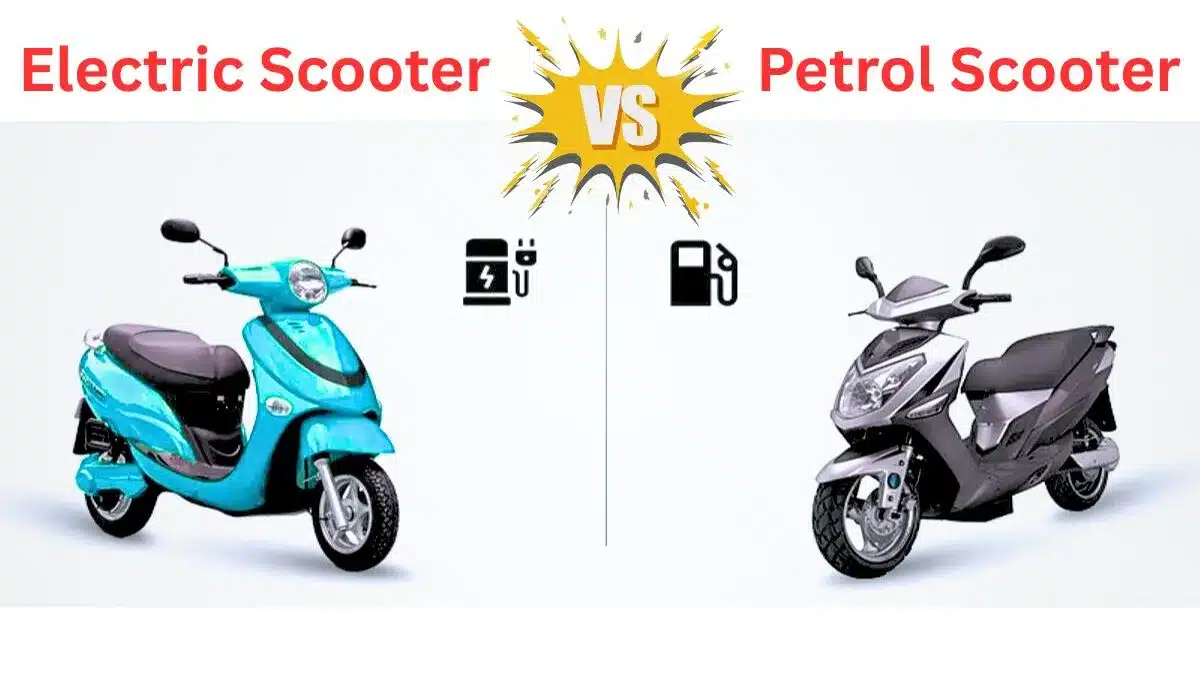
Electric Scooter vs Petrol Scooter—which actually saves you money 2026? Gadgets High breaks down real prices, range, performance & verdict.
Electric Scooter vs Petrol Scooter: The Real 2026 Verdict Nobody Is Giving You
Everyone has an opinion. Your neighbour swears by his Honda Activa. Your office colleague just picked up an Ola S1 and will not stop talking about it. And somewhere in the middle, you are stuck trying to figure out which one actually makes sense for your life. Gadgets High is cutting through the noise today. This is not a sponsored comparison, not a brand cheerleading session. This is a real breakdown of electric scooter vs petrol scooter in 2026, covering money, performance, convenience, and the stuff most reviews conveniently skip.

Electric Scooter vs Petrol Scooter—The 2026 Context
A few years ago this debate had a clear winner. Petrol scooters were cheaper upfront, easier to refuel, and more reliable. Electric options were mostly range-anxious city crawlers with questionable after-sales support. That equation has shifted significantly in 2026.
Charging infrastructure has expanded across Indian cities battery technology has improved, and brands like Ather, Ola, TVS, and Hero have pushed real-world performance into genuinely competitive territory. Petrol scooters have not stood still either. Fuel efficiency has improved, BS6 compliance has made engines cleaner, and legacy brands still carry enormous service network advantages. The honest answer is that neither side has a clean knockout. What matters is which one fits your specific situation Gadgets High breaks it down across every factor that actually matters.
Head-to-Head: Electric Scooter vs Petrol Scooter—Quick Comparison
Factor | Electric Scooter | Petrol Scooter
Upfront Cost—Rs. 80000 – 150000—Rs. 60000 – 120000
Monthly Fuel/Charging Cost—Rs. 300—600 | Rs. 2500 – 4500
Annual Maintenance—Rs. 2000 – 4000—Rs. 6000 – 10000
Real World Range—80 – 140 km per charge—250 – 350 km per tank
Refuel/Recharge Time—3 – 6 hours (home)—3 – 5 minutes
Top Speed (avg)—80 – 90 kmph—85 – 100 kmph
Service Network—Expanding (metro-heavy)—Pan-India, robust
Resale Value—Uncertain—Established & stable
From Gadgets High’s analysis the upfront cost gap is narrowing fast but petrol scooters still hold the price advantage at entry level. The running cost story, however, flips completely in favour of electric.
Top 3 Electric Scooters (India 2026)
- Ola S1 Pro Gen 3
- Ather 450X Gen 3
- TVS iQube ST
Top 3 Petrol Scooters (India 2026)
- Honda Activa 6G
- TVS Jupiter 125
- Suzuki Access 125
FULL COMPARISON TABLE (Electric Scooter vs Petrol Scooter)
| Feature | Ola S1 Pro (EV) | Ather 450X (EV) | TVS iQube ST (EV) | Activa 6G (Petrol) | Jupiter 125 (Petrol) | Access 125 (Petrol) |
|---|---|---|---|---|---|---|
| Price (RS.) | 1.3 – 1.5 L | 1.5 – 1.8 L | 1.3 – 1.6 L | 75K – 88K | 75K – 90K | 77K – 94K |
| Range / Mileage | 150–240 km | 110–150 km | 140–212 km | 45–50 km/l | 46–48 km/l | 45–47 km/l |
| Top Speed | 120–125 km/h | 90–100 km/h | ~82 km/h | ~85 km/h | ~90 km/h | ~90 km/h |
| Engine / Motor | 11 kW motor | 6.4 kW motor | 4.4 kW motor | 110cc engine | 125cc engine | 124cc engine |
| Running Cost | ₹0.2–0.3/km | ₹0.2–0.3/km | ₹0.2–0.3/km | ₹2–3/km | ₹2–3/km | ₹2–3/km |
| Charging / Fuel | 5–6 hr charge | 4–5 hr charge | 4–5 hr charge | Petrol | Petrol | Petrol |
| Maintenance | Very Low | Low | Low | Medium | Medium | Medium |
| Best For | Performance + range | Tech + premium | Family + reliability | Budget + reliability | Comfort + mileage | Power + pickup |
The Running Cost Reality—Electric Scooter vs Petrol Scooter
This is the number that changes the entire argument. A petrol scooter averaging 45 kmpl in city traffic and fuel at Rs. 105 per litre means you are spending roughly Rs. 2800 to Rs. 4500 every month if you ride 1200 to 1800 km monthly. An electric scooter covering the same distance at average electricity rates of Rs. 8 per unit costs you Rs. 300 to Rs. 600 a month.
That is a saving of Rs. 2000 to Rs. 4000 every single month. Over 3 years, that compounds into Rs. 72000 to Rs. 144000 in pure savings, often covering the entire upfront price premium of an electric scooter. Gadgets High considers this the single strongest argument for switching to electric in 2026 if you are a regular daily commuter.
Electric Scooter vs Petrol Scooter – Performance on the Road—Honest Observations
Electric scooters offer instant torque. The moment you twist the throttle, the power delivery is immediate and linear. For city stop-go traffic, this is a genuine advantage. No gear hunting, no engine lag, no stalling at signals. Petrol scooters have a more progressive power curve but experienced riders are obviously comfortable with this. At higher speeds and on highways most petrol scooters still hold a slight edge in sustained top-end performance.
Electric scooter motors are optimised for urban riding patterns, not highway cruising at 80 to 90 kmph for extended distances. Gadgets High’s honest take is that for 90 percent of Indian commuters riding within city limits the electric scooter’s performance is not just adequate, it is genuinely better for the usecase.
Electric Scooter vs Petrol Scooter – Range and the Refuelling—Convenience Gap
This is where petrol still wins and it is important not to paper over that fact. A 5-litre tank at 45 kmpl gives you 225 km of range. Fill up in 3 minutes at any of the lakhs of petrol stations across India. An electric scooter at 100 to 130 km real-world range needs 4 to 6 hours of home charging or a fast charger session at a public station.
The convenience gap is real for anyone doing long distances, living in an apartment without dedicated parking, or riding regularly in tier-3 cities where charging infrastructure is still thin.
Gadgets High will be straightforward about this If you regularly cover 80 km or more in a single day or if your daily parking situation makes overnight charging impractical, the petrol scooter remains the more sensible choice right now.
Electric Scooter vs Petrol Scooter – Maintenance—The Hidden Advantage of Going Electric
Petrol scooters have engine oil changes every 3000 to 4000 km, air filter cleaning, spark plug replacements, carburettor or fuel injection servicing, and belt or chain maintenance. These are not catastrophic costs individually but they add up. Electric scooters have dramatically fewer moving parts.
No oil, no spark plugs, no fuel system components. Brake pads and tyres are the primary wear items. Annual maintenance typically runs Rs. 2000 to Rs. 4000 for an electric scooter versus Rs. 6000 to Rs. 10000 for a comparable petrol model according to Gadgets High’s ongoing tracking of ownership costs.
The caveat is battery health. Battery degradation over 4 to 6 years is a legitimate concern and replacement packs can be expensive. This remains the biggest long-term maintenance wildcard for electric scooter ownership.
Service Network—Petrol Scooter’s Last Strong Fortress
Hero, Honda, TVS, and Bajaj have service centres in virtually every town and tehsil across India. You break down 50 km from the nearest city on a petrol scooter there is a reasonable chance a mechanic nearby can get you moving. You break down on an electric scooter, your options are significantly more limited. Ather and Ola have made serious progress in metro cities but tier-2 and tier-3 coverage is still developing. TVS iQube benefits from the parent company’s massive network. Gadgets High’s recommendation is that if you live outside a major city or frequently ride into areas with limited EV infrastructure weigh the service network factor heavily before switching.
Electric Scooter vs Petrol Scooter – Environment—The Bigger Picture
Electric scooters produce zero direct tailpipe emissions. In cities like Delhi and Mumbai where air quality is a genuine public health concern, this matters. The full lifecycle emissions picture is more nuanced since electricity generation in India still relies significantly on coal.
But even accounting for grid emissions, studies suggest electric two-wheelers emit roughly 30 to 40 percent less CO2 over their lifetime than equivalent petrol scooters. Gadgets High acknowledges both sides of this argument but the directional trend is clear. As India’s grid gets greener, the electric scooter’s environmental advantage only strengthens over time.
Pros and Cons: Electric Scooter vs Petrol Scooter
Electric Scooter – Pros:
• Rs. 2,000 to Rs. 4,000 monthly savings on fuel
• Lower annual maintenance costs
• Instant torque for city riding
• Zero direct emissions
• Smart connected features and OTA updates
Electric Scooter – Cons:
• Higher upfront cost at entry level
• Charging time and infrastructure gaps outside metros
• Battery degradation concern over 4 to 6 years
• Limited service reach in smaller cities
• Resale value still unpredictable
Petrol Scooter—Pros:
• Lower initial purchase price
• 5-minute refuelling at widespread fuel stations
• Higher sustained range per fill
• Established resale value and market
• Pan-India service network
Petrol Scooter—Cons:
• Rs. 2,500 to Rs. 4,500 monthly fuel expenditure
• Higher recurring maintenance costs
• Direct air and noise pollution
• No smart features or OTA improvements
• Fuel price volatility adds budget uncertainty
Final Verdict—Which Should You Actually Buy in 2026?
Gadgets High’s position is clear Buy an electric scooter if you ride within city limits daily have reliable home charging access, and your daily distance stays under 60 to 70 km. The running cost savings are too significant to ignore for a daily commuter and the riding experience in urban traffic genuinely favours electric.
Stick with a petrol scooter if you regularly cover long distances, live in a tier-2 or tier-3 city with limited charging infrastructure, or need the peace of mind of a mature, widespread service network. The electric scooter vs petrol scooter debate does not have a universal answer in 2026. It has a personalised one. Gadgets High will keep tracking new launches, battery technology developments, and infrastructure expansion across India. Check back for updated comparisons as the market evolves.
FAQs – Electric Scooter vs Petrol Scooter
Q1. Is an electric scooter cheaper than a petrol scooter overall?
Over a 3-year ownership period, an electric scooter typically works out cheaper than a comparable petrol scooter even with a higher upfront price. Monthly fuel savings of Rs. 2,000 to Rs. 4,000 and lower maintenance costs offset the initial premium. Gadgets High recommends calculating your specific monthly riding distance to estimate your personal break-even point.
Q2. What is the real-world range of electric scooters in 2026?
Most competitive electric scooters under 1.5 lakh deliver 80 to 130 km in real-world mixed city riding. Claimed range figures are tested in Eco mode at controlled speeds. Gadgets High suggests using 70 to 75 percent of the manufacturer’s claimed range as your practical planning number.
Q3. Can I charge an electric scooter at home?
Yes. All current electric scooters come with a portable home charger that works with a standard 15-amp socket. A full charge from empty typically takes 4 to 6 hours overnight. Gadgets High recommends setting a charging schedule to take advantage of off-peak electricity tariffs where available.
Q4. Which is better for long highway rides Electric Scooter vs Petrol Scooter?
Petrol scooters currently hold a clear advantage for highway riding and long-distance travel. Higher sustained top-end performance, 250 to 350 km range per tank, and 3-minute refuelling at widespread petrol stations make them far more practical for inter-city use. Gadgets High recommends electric scooters primarily for urban and semi-urban commuting in 2026.
Q5. Are electric scooters reliable for daily use?
Yes, for most urban daily commuters. Brands like TVS, Ather, and Hero have significantly improved build quality and software reliability. The primary concern for daily use is ensuring your charging routine is consistent. Gadgets High tracks ownership feedback across major electric scooter models and overall daily reliability scores have improved considerably in the past 12 to 18 months.
