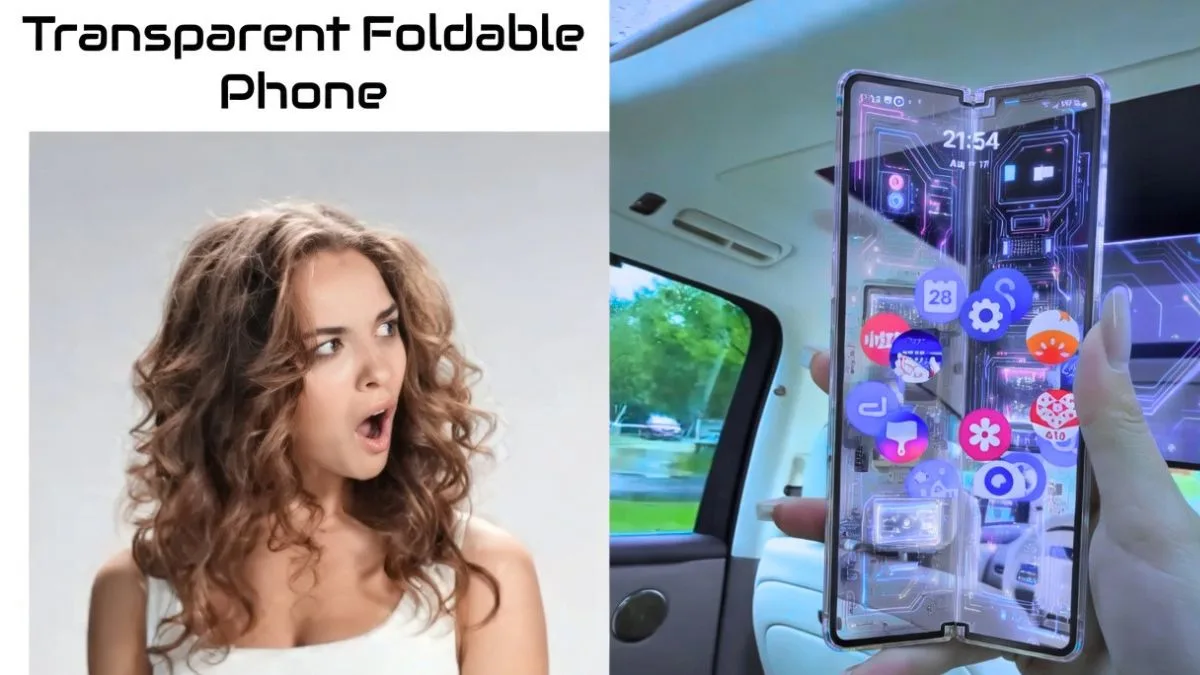
Imagine holding a phone that is completely see-through the back panel, the frame, even the battery all crystal clear, like a pane of glass. Now fold it in half like a book. That is the idea behind a Transparent Foldable Phone (TFP): a device that merges two of the most ambitious concepts in modern mobile technology into one audacious package.
At Gadgets High we keep a close eye on where smartphone technology is headed not just what is on shelves today, but what engineers are quietly sketching on whiteboards right now. And the Transparent Foldable Phone concept sits squarely at the intersection of engineering ambition and genuine everyday utility.
Before diving into the futuristic specifications, let us look at the best foldables you can actually buy in India right now because they tell us everything about where things are heading.
2026 Transparent Foldable Phone Prices in India — Real Phones You Can Buy Today
True transparent foldables are not on store shelves yet. But these are the most advanced foldable smartphones available in India.
Samsung Galaxy Z Fold 7 Book-Style Foldable

- 12GB RAM / 256GB Storage Rs. 1,74,999
- 12GB RAM / 512GB Storage Rs. 1,86,999
- 16GB RAM / 1TB Storage Rs. 2,16,999
Available in: Blue Shadow, Silver Shadow, Jet Black, Mint (online exclusive)
Buy from: Samsung.com, Amazon India, Flipkart, authorised offline stores
Motorola Razr 60 Flip-Style Foldable

- 8GB RAM / 256GB Storage Rs. 49,999
- Swarovski Crystal Edition Rs. 54,999
Available in: Gibraltar Sea, Lightest Sky, Spring Bud
Buy from: Flipkart, Motorola.com, offline stores
Motorola Razr 60 Ultra Premium Flip

- 16GB RAM / 512GB Storage Rs. 98,999
Available in: Rio Red, Scarab, Mountain Trail, Cabaret
Buy from: Amazon India, Flipkart, Motorola.com
Infinix Zero Flip 5G Budget Flip

- 8GB RAM / 512GB Storage Rs. 54,999
- With SBI bank offer approx. Rs. 49,999 effective
Available in: Rock Black, Violet Garden
Buy from: Flipkart
What Is a Transparent Foldable Phone and How Does It Work?
A TFP is not magic it is the result of several advanced technologies working together inside one device. Here is what makes it tick.
1. Transparent OLED Display
Unlike standard OLED panels that sit on an opaque backing, a transparent OLED allows light to pass through the screen. The pixels activate only where needed, leaving the rest see-through up to 80% transparency when the screen is off.
2. Under-Display Camera
There is no room for a notch or punch-hole when the entire front is see-through. The camera sits embedded behind the display itself, invisible until activated. Samsung has already used this in conventional foldables the TFP takes it a step further.
3. Nano-Material Chassis
Aerospace-grade transparent polycarbonate with nano-coatings forms the structural body. It needs to survive drops, flex through thousands of folds, and remain optically clear throughout its lifespan.
4. Transparent Graphene Battery
Traditional batteries are opaque slabs of black chemistry. Graphene-based thin-film cells have been demonstrated in labs with genuine see-through properties but scaling this to a 5,000 mAh smartphone battery remains one of the hardest engineering problems in consumer electronics today.
5. Flexible Hinge System
The hinge is what makes the fold possible and what makes foldable phones expensive to build. The TFP hinge must allow smooth folding without cracking the transparent display and without leaving a visible crease that breaks the see-through illusion.
6. TransparentOS Based on Android 16
Software must adapt to a display you can see through. The UI needs to handle dark overlays on bright backgrounds, AR overlays, dual-side touch input, and real-time translation as native features not afterthoughts or add-ons.
What Does a Transparent Foldable Phone Look Like?
When unfolded, the TFP reveals a large, nearly see-through display the circuitry, the hinge, and the edge components are all visible through the clear chassis, like looking at a beautifully engineered machine from the outside. When folded, it sits compact and pocket-friendly, with a cover screen visible on the outside.
Two colour variants are expected: Fully Transparent where everything inside is visible and Frosted Transparent, which diffuses the clarity slightly for a more private, premium look. Both turn heads. Neither looks like anything currently on the market.
Full Specifications Transparent Foldable Phone (Concept)
Important Note: These are concept-level specifications based on published patent filings, emerging display research, and credible industry sources. This is not a shipping product. All figures represent the aspirational engineering target.
Display Specifications
| Type | Transparent AMOLED (Foldable and Flexible) |
| Inner Screen Size | 7.9 inches (unfolded) |
| Cover Screen Size | 4.6 inches (folded) |
| Inner Resolution | 2160 x 1920 pixels |
| Cover Resolution | 1440 x 1080 pixels |
| Refresh Rate | 120 Hz |
| Touch Sampling Rate | 240 Hz |
| Peak Brightness | 1,000 nits |
| Transparency Level | 80% (screen off) |
| HDR Support | HDR10+ |
| Glass Protection | Gorilla Glass 5 (Flexible variant) |
Design and Build
| Form Factor | Transparent Book-Style Foldable |
| Dimensions (Open) | 7.9 x 3.6 x 0.25 inches (approx.) |
| Dimensions (Folded) | 4.0 x 3.6 x 0.5 inches |
| Weight | 210 grams |
| Frame Material | Aerospace-grade transparent polycarbonate with nano-coating |
| Colour Options | Fully Transparent / Frosted Transparent |
| Water and Dust Rating | IP68 (concept target) |
Performance
| Processor | Qualcomm Snapdragon 8 Gen 4 |
| GPU | Adreno (Latest Gen, AR-optimised) |
| RAM | 12GB / 16GB LPDDR5X |
| Storage | 256GB / 512GB / 1TB UFS 4.0 |
| Expandable Storage | No — integrated cloud storage |
| Operating System | TransparentOS UI, based on Android 16 |
Camera System
| Main Rear Camera | 108 MP, f/1.8, OIS (under transparent display) |
| Telephoto Lens | 48 MP, 5x Optical Zoom |
| Ultra-Wide Lens | 50 MP, 120-degree FOV, f/2.0 |
| Front Camera | 32 MP, AI-enhanced, under-display (no notch, no hole) |
| Video Recording | 8K at 30fps / 4K at 120fps / 1080p at 240fps |
| Slow-Motion | Up to 960 fps |
Battery and Charging
| Battery Type | Transparent Graphene-based |
| Capacity | 5000 mAh |
| Wired Charging | 80W (0 to 100% in approx. 30 minutes) |
| Wireless Charging | 50W Fast Wireless |
| Reverse Wireless | 15W |
Connectivity
| 5G | mmWave + Sub-6GHz |
| Wi-Fi | Wi-Fi 7 |
| Bluetooth | 6.0 |
| NFC | Yes |
| USB | Type-C 4.0 |
| Satellite | Satellite Communication Support |
Audio
| Speakers | Stereo Transparent Sound Chambers |
| Formats Supported | Dolby Atmos, Hi-Res Audio Certified |
Biometrics and Sensors
| Fingerprint | Transparent Ultrasonic In-Display |
| Face Unlock | Under-display camera recognition |
| Other Sensors | Advanced AR Depth Sensor, Gyroscope, Accelerometer, Proximity Sensor, Compass, Barometer |
Special Features
- Real-time AR Translation (live text overlay through transparent display)
- Dual-Side Touch Input (interact from front and back simultaneously)
- Transparent Gaming Mode (background blends with the live environment behind the phone)
- Holographic Projection Mode (projects image up to 15cm above the screen surface)
Comparison Table — Real Foldables vs. Transparent Foldable Phone Concept in India 2026
| Specification | Samsung Z Fold 7 | Motorola Razr 60 | Motorola Razr 60 Ultra | Infinix Zero Flip 5G | TFP Concept |
|---|---|---|---|---|---|
| Form Factor | Book-fold | Clamshell flip | Clamshell flip | Clamshell flip | Book-fold + Transparent |
| India Price | Rs.1,74999 onwards | Rs.49999 | Rs.98999 | Rs.54999 | TBD (Concept) |
| Inner Display | 8.0″ AMOLED 2X | 6.9″ P-OLED | 6.96″ P-OLED | 6.9″ AMOLED | 7.9″ Transparent AMOLED |
| Cover Screen | 6.5″ AMOLED 2X | 3.6″ AMOLED | 4.0″ AMOLED | 3.64″ AMOLED | 4.6″ Transparent AMOLED |
| Refresh Rate | 120 Hz | 120 Hz | 165 Hz | 120 Hz | 120 Hz |
| Processor | Snapdragon 8 Elite | Dimensity 7400X | Snapdragon 8 Elite | Dimensity 8020 | Snapdragon 8 Gen 4 |
| RAM | 12GB / 16GB | 8GB | 16GB | 8GB | 12GB / 16GB |
| Main Camera | 200 MP | 50 MP | 50 MP | 50 MP | 108 MP (under-display) |
| Front Camera | 10 MP | 32 MP | 50 MP | 50 MP | 32 MP (under-display) |
| Battery | 4,400 mAh | 4,500 mAh | 4,700 mAh | 4,720 mAh | 5,000 mAh (graphene) |
| Wired Charging | 25W | 30W | 68W | 70W | 80W |
| Wireless Charging | 15W | 15W | 30W | Not available | 50W |
| 5G | Yes | Yes | Yes | Yes | Yes (mmWave + Sub-6) |
| Wi-Fi Standard | Wi-Fi 6E | Wi-Fi 6E | Wi-Fi 7 | Wi-Fi 5 | Wi-Fi 7 |
| Bluetooth | 5.3 | 5.4 | 5.4 | 5.3 | 6.0 |
| Water Resistance | IPX8 | IP48 | IP48 | IP54 | IP68 (target) |
| Operating System | Android 16 / One UI 8 | Android 15 / MyUX | Android 15 / MyUX | Android 14 / XOS | Android 16 / TransparentOS |
| Transparency | None | None | None | None | 80% (screen off) |
| Holographic Mode | None | None | None | None | Yes — up to 15cm above screen |
| Available Now? | YES | YES | YES | YES | 2028–2030 (estimated) |
Which Companies Are Working on Transparent Foldable Phones?
At Gadgets High, we separate documented facts from speculation. Here is where the major players actually stand as of April 2026.
Samsung
The most active player in this space. Samsung has filed patents for a transparent foldable concept reportedly named the Galaxy Z Slide. At MWC 2026, Samsung Display demonstrated a Mobile Slidable concept a device that physically extends from 5.1 inches to 6.7 inches via a mechanical sliding system. A next-generation TriFold 2 is confirmed in development for a mid-2027 target. Transparent elements are currently in the patent and prototype stage.
Xiaomi
Unveiled a transparent-body concept phone earlier than any other mainstream brand, proving that the see-through aesthetic was viable in a handheld device. Has not confirmed a transparent foldable product but remains active in experimental form-factor research.
Apple
Widely reported to be testing both foldable screens and transparent display elements internally. Apple’s first-ever foldable iPhone a conventional model is broadly expected in late 2026. A transparent variant would be several years further out.
OPPO and Vivo
Both brands have made significant investments in foldable R&D, particularly around crease-reduction technology. OPPO’s Find N6 meaningfully reduced the visible crease that has long plagued book-fold phones. Transparent elements are not yet confirmed from either brand.
Advantages and Disadvantages of Transparent Foldable Phones
Advantages Why the Transparent Foldable Phone Is Remarkable
- Big tablet-class display that folds into a pocket the best of both worlds in one device
- 80% screen-off transparency creates a design unlike anything currently available
- Under-display cameras remove all notches and punch-holes for a completely clean screen
- Real-time AR translation and dual-side touch open entirely new interaction models
- Holographic projection mode could redefine video calls and content presentations
- Graphene battery promises faster charging speeds and a longer overall cell lifespan
- Wi-Fi 7 and Bluetooth 6.0 future-proof the connectivity for years ahead
Disadvantages What Still Needs Solving
- Transparent OLED panels are expensive to manufacture and more prone to surface scratches
- Graphene batteries remain very difficult to scale into mass production reliably
- Dual-hinge mechanisms add significant cost and directly impact repairability
- Achieving an IP68 rating on a completely transparent chassis is an unsolved engineering challenge
- Launch pricing will almost certainly be extreme likely far above today’s Galaxy Z Fold 7
- Privacy is a genuine concern a see-through phone can expose screen content from both sides
- App developers will need time and incentive to properly optimise for transparent and dual-sided displays
Transparent Foldable Phone and Our Daily Life Use Cases
The TFP is not just about looking impressive at a coffee shop. If the software lives up to the hardware, it could genuinely change how we interact with our devices every single day.
Studies and Notes: Imagine reading your notes through a transparent screen while looking at the actual textbook below it a natural AR overlay with zero friction.
Video Calls: With the transparent display and holographic projection, the person on the other end of your call feels far more present than a flat face on a glass rectangle.
Gaming: The transparent gaming mode blends the game environment with the real background behind your phone, creating a mixed-reality experience without needing a separate headset.
Translation: Point the TFP at a sign in Japanese, French, or Arabic the real-time AR translation overlays the meaning directly onto the transparent display, right over the original text.
Business and Presentations: The holographic projection mode projects content up to 15cm above the screen, turning your phone into a portable mini-projector in a meeting room.
FAQs – Transparent Foldable Phones
What exactly is a Transparent Foldable Phone (TFP)?
A TFP is a smartphone that combines a foldable form factor with a transparent body and display. Instead of an opaque chassis, the body is made from specially engineered clear materials, and the OLED screen itself allows light to pass through when inactive. You can literally see through it making it unlike any phone currently on the market anywhere in the world.
Can I buy a transparent foldable phone right now?
Not yet. As of April 2026, no company has commercially released one. What you can buy are excellent foldables like the Samsung Galaxy Z Fold 7 (from Rs.1,74999 in India) or the more affordable Motorola Razr 60 (Rs.49,999). These are the best available today, but the transparent element is still firmly at the concept and patent stage.
When could a transparent foldable phone realistically launch?
Most analysts and the research we follow at Gadgets High suggest a realistic commercial debut is 3 to 5 years away meaning somewhere between 2028 and 2030 for first-generation consumer models. Mass production of transparent OLED panels and graphene batteries at smartphone scale is the primary bottleneck right now.
What will a transparent foldable phone actually look like?
Based on concept designs and Samsung’s patent drawings, the TFP looks like a conventional book-style foldable when folded compact enough to slip into a jeans pocket. When unfolded, the entire device reveals a large, nearly see-through display. Two finishes are expected: Fully Transparent and Frosted Transparent, the latter offering a more privacy-friendly look.
How does the camera work if the screen is transparent?
The TFP uses under-display camera technology a concept Samsung has already deployed in Galaxy Z Fold phones. The camera sits behind the display panel and activates only when the camera app is open. When not in use, the area above the camera is indistinguishable from the rest of the transparent display. No notch. No hole. Just a clean, uninterrupted sheet of see-through glass.
What is the best foldable phone to buy in India right now?
It depends on your budget and use case. The Samsung Galaxy Z Fold 7 (from Rs.1,74999) is the all-around best right now strongest processor, best cameras with that flagship 200MP sensor, and the most refined large-screen experience. For a flip phone at a friendlier price, the Motorola Razr 60 at Rs.49999 is excellent value. The Razr 60 Ultra (Rs.98999) adds a flagship chip and a wider outer display. The Infinix Zero Flip 5G (Rs.54999) is the right pick for first-time flip buyers on a tighter budget.
What is Samsung’s Galaxy Z Slide and how does it relate to TFP?
The Galaxy Z Slide is a concept Samsung Display demonstrated at MWC 2026. Rather than folding, the screen physically extends vertically via a mechanical sliding mechanism going from 5.1 inches to 6.7 inches. It is related to TFP in that both explore form factors beyond the conventional flat slab, but the Z Slide does not incorporate transparency. A commercial release is not expected before late 2027.
Is a transparent phone a privacy risk?
Yes and this is one of the most underrated concerns around Transparent Foldable Phone technology. A transparent phone means anyone standing near you can potentially see your screen content from the back. The Frosted Transparent variant helps but does not fully solve the problem. Good TFP software design will need aggressive privacy modes think automatic privacy blur and biometric screen locks as standard default features, not optional extras.
How much will a transparent foldable phone cost when it launches?
First-generation pricing is difficult to predict precisely, but given the complexity of transparent OLED manufacturing and graphene battery production, a realistic India launch price could be in the Rs.3,00000 to Rs.5,00000 range for early models. Expect pricing to fall significantly within 2 to 3 years as production yields improve exactly the same pattern that every new foldable phone generation has followed so far.
Is the TFP just a gimmick, or does it serve a real purpose?
That is the question worth asking and the honest answer is: it depends on the software. Transparency for its own sake would indeed be a gimmick. But the TFP concept unlocks features a standard phone genuinely cannot deliver: real-time AR translation overlaid on the physical world, dual-side touch for more intuitive interaction, and holographic projection that changes how we present and share content. If manufacturers invest in making those features truly useful, the TFP could be to foldables what the foldable was to flat slabs initially surprising, eventually indispensable.
Final Verdict Gadgets High
A Brilliant Idea That Needs Time to Grow Up
The Transparent Foldable Phone is not just another gadget it is a legitimate shift in how we think about what a phone can be. The combination of transparency, foldability, and features like holographic projection and real-time AR translation does not just improve on existing smartphones; it reframes the entire category.
Here at Gadgets High, we have tracked every major smartphone evolution since the original capacitive touchscreen turned the industry upside down. Every single time, the first version was expensive, fragile, and misunderstood and then, gradually, it became the new normal. The foldable phone went through exactly this cycle. The TFP sits at that same early inflection point today.
The phones you can actually buy right now the Samsung Galaxy Z Fold 7, the Motorola Razr 60 series, the Infinix Zero Flip 5G are genuinely excellent. They are the right choice if you want something in your hands today. But they are also, in a very real sense, stepping stones toward what the TFP will eventually become.
When transparent OLED yields improve, when graphene batteries reach production scale, and when software designers get serious about what a see-through, dual-sided screen can actually do in daily life that is when this concept becomes a product worth queuing for.
Until then, keep watching Samsung’s patents, keep following what MWC brings each year, and keep reading Gadgets High because we will be covering every step of this journey as it unfolds.
The future is not just foldable. It is transparent.
All prices verified from Amazon India, Flipkart, Samsung India and Smartprix April 2026. | Gadgets High | India’s Future Tech Authority
